
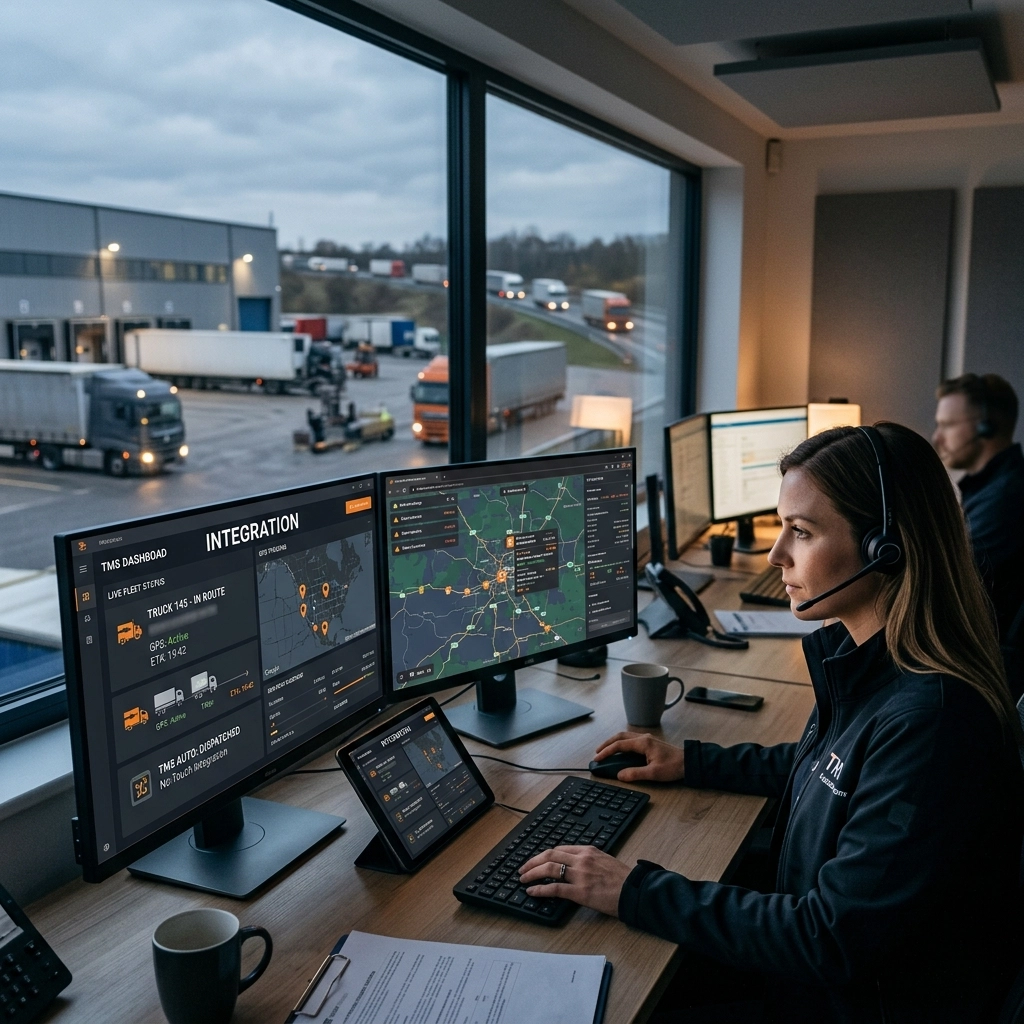
Let’s be honest: the old way of managing freight is a total drain on your resources. If your dispatchers are still spending half their day on "where’s my truck" check calls and manual data entry, you aren't just behind the curve, you’re losing money every single hour. At Performance Logistics Consulting LLC, we’ve seen it all, and we’ve decided to do something about it. We’ve positioned ourselves as the Automation Powerhouse in this industry because we know that the future of the supply chain isn’t just about moving boxes; it’s about moving data.
No-touch logistics is the holy grail. It’s the idea that a load can be booked, tracked, and invoiced without a single human finger hitting a keyboard. Sounds like science fiction? It’s not. By integrating your Transportation Management System (TMS) with real-time GPS tracking logistics, you create a self-correcting ecosystem that works while you sleep. Why keep burning overhead on tasks a machine can do faster and far more efficiently?
What is No-Touch Logistics and Why Does It Matter?
No-touch logistics refers to a fully automated supply chain workflow where human intervention is only required by exception. In a traditional setup, humans handle every step: lane analysis, carrier selection, manual tendering, tracking updates, and freight audit. In a no-touch environment, TMS automation takes the wheel. The system identifies the need for a shipment, selects the carrier based on pre-set logic, and monitors the progress via real-time data feeds.
Why shift to this model now? Because the volatility in global trade is at an all-time high. Manual systems fail the moment a port closes or a highway shuts down. Supply Chain Deep Tech allows for a level of resiliency that manual teams simply cannot match. When you remove the human element from repetitive tasks, you reduce errors by up to 40% and increase speed-to-market significantly. It’s about building a "lights-out" logistics department that scales without adding headcount.

How Does AI Load Matching Drive Efficiency?
The first step in the no-touch journey is AI load matching. Traditional tendering relies on a "waterfall" method, you call Carrier A, wait for an answer, then call Carrier B. It’s slow, it’s frustrating, and it often results in paying premium spot rates because you ran out of time. AI load matching flips the script by using deep learning algorithms to analyze historical performance, current capacity, and pricing trends in milliseconds.
The system doesn’t just look for a truck; it looks for the right truck. It considers factors like driver HOS (Hours of Service), equipment type, and even historical dwell times at specific facilities. By the time your team arrives at the office, the AI has already tendered and confirmed the load at the best possible price. This isn't just a minor improvement; it’s a total overhaul of the procurement process. Why spend thousands on broker fees when the automation powerhouse at Performance Logistics Consulting LLC can show you how to do it yourself?
Why is GPS Tracking Logistics the Backbone of Automation?
You can have the best TMS in the world, but if it doesn’t know where the truck is, it’s useless. GPS tracking logistics provides the "ground truth" that triggers every other automated event. When we talk about integration, we aren't just talking about a dot on a map. We are talking about deep integration where GPS pings feed directly into the TMS to trigger status updates.
When a truck crosses a geofence five miles from your warehouse, the TMS should automatically:
- Notify the warehouse receiving team.
- Update the customer portal with a precise ETA.
- Check the driver’s ELD (Electronic Logging Device) to ensure they have enough hours to complete the next leg.
- Prepare the digital Bill of Lading (BOL).
This is where the magic happens. If the truck is delayed by traffic, the TMS automation adjusts the appointment time and notifies the carrier without a human ever picking up a phone. It’s seamless, it’s fast, and it’s how modern companies stay profitable.

How to Integrate TMS Automation with GPS Data Streams?
The technical side of integration is often where companies get stuck, but it’s simpler than it looks if you have the right framework. The "Automation Powerhouse" approach relies on three main pillars: APIs, Webhooks, and EDI (Electronic Data Interchange).
- APIs (Application Programming Interfaces): These act as the bridge between your GPS provider (like Samsara or Motive) and your TMS. APIs allow for real-time, two-way communication.
- Webhooks: Instead of the TMS asking the GPS "Where are you?" every five minutes, webhooks allow the GPS to push data to the TMS only when a specific event happens, like a geofence breach or a sudden stop.
- EDI 214 Messages: This is the industry standard for shipment status. By automating the generation of EDI 214 messages via GPS data, you keep your customers in the loop without any manual intervention.
Integrating these systems isn't just about the tech; it’s about the logic. You have to define the rules. If the GPS shows the truck hasn't moved in four hours, what happens? Our Performance Logistics Consulting automation framework helps you map out these "if-then" scenarios so the system knows how to react to real-world chaos.
Can Supply Chain Deep Tech Really Reduce Freight Spend?
Yes, and the numbers don't lie. Companies using high-level Supply Chain Deep Tech report a 15-18% reduction in total freight spend within the first year. This savings comes from several areas. First, you eliminate the "hidden costs" of manual labor: the hours spent on emails and phones. Second, AI load matching ensures you are always getting the best market rate, avoiding the panic-buying associated with manual dispatch.
Furthermore, real-time visibility reduces detention charges. If you know a truck is arriving in exactly 22 minutes, you can have the dock ready. No more paying drivers to sit in your parking lot because of a communication breakdown. Why not make money while doing so? By optimizing the flow of data, you're essentially finding "found money" in your existing operations.

The Performance Logistics Consulting Automation Framework
We don’t just give you a piece of software and wish you luck. Our approach is holistic. We look at your entire network analysis and determine where the friction points are. Most companies have a "Swiss cheese" logistics strategy: plenty of good parts, but full of holes where data falls through. We plug those holes with the Performance Logistics Consulting automation framework.
We focus on:
- Data Cleanliness: If your addresses or carrier codes are wrong, automation won't work.
- System Synergy: Ensuring your ERP, WMS, and TMS all speak the same language.
- Predictive Analytics: Using the GPS data to predict future bottlenecks before they happen.
It’s a comprehensive way to ensure that your investment in technology actually translates to your bottom line. We’ve seen too many companies buy expensive software only to use 10% of its capability. We make sure you’re using 100%.
Common Mistakes When Automating Logistics Workflows
A common pitfall we see is trying to automate a broken process. If your current manual process is a mess, automating it just makes the mess happen faster. You need a solid foundation first. Another mistake is "over-filtering" data: if you don't trust the GPS pings, you’ll end up double-checking the machine, which defeats the purpose of "no-touch."
You also need to consider your carrier base. Not every carrier is ready for deep integration. That’s where Performance Logistics Consulting LLC comes in. We help you vet your carrier partners to ensure they have the GPS and ELD capabilities required to support your no-touch goals. It’s about building a digital community of partners who are as tech-forward as you are.

Step-by-Step: Moving Toward a No-Touch Future
Ready to start? Here is the roadmap we usually recommend for clients looking to become an automation powerhouse:
- Audit Your Tech Stack: Does your TMS have open APIs? Does your GPS provider support real-time pushes?
- Clean Your Data: Standardize your locations, SKUs, and carrier profiles.
- Implement Geofencing: Start by automating arrival and departure alerts. It’s an easy win that builds trust in the system.
- Integrate AI Load Matching: Move away from manual bid boards and let the algorithms handle the heavy lifting.
- Scale and Refine: Once the basics are automated, move into advanced predictive ETAs and automated freight audit.
The transition doesn’t happen overnight, but the rewards are immediate. Every manual step you remove is a victory for your margin.
Contact Performance Logistics Consulting LLC Today
Logistics is changing fast, and if you aren't moving toward automation, you're essentially moving backward. Why struggle with manual processes when the solution is right in front of you? We are here to help you navigate the complexities of Supply Chain Deep Tech and turn your logistics department into a profit center.
If you’re ready to see what a true "Automation Powerhouse" can do for your business, reach out to us. We love talking shop and figuring out how to squeeze more efficiency out of your supply chain.
You can reach Rachel at +1 (843) 595-9766 to schedule a discovery call, or feel free to email Shawn directly at shawn@plconsultingllc.com. Let’s get to work on making your logistics "no-touch" and your profits high.
Whether you need a full network analysis or just want to know which GPS integration works best with your TMS, we’ve got the expertise to guide you. Don't wait until your competitors have already automated you out of the market. Give us a call or drop us an email today!
We’re always here to help and look forward to hearing from you.
Rachel: +1 (843) 595-9766
Shawn: shawn@plconsultingllc.com