
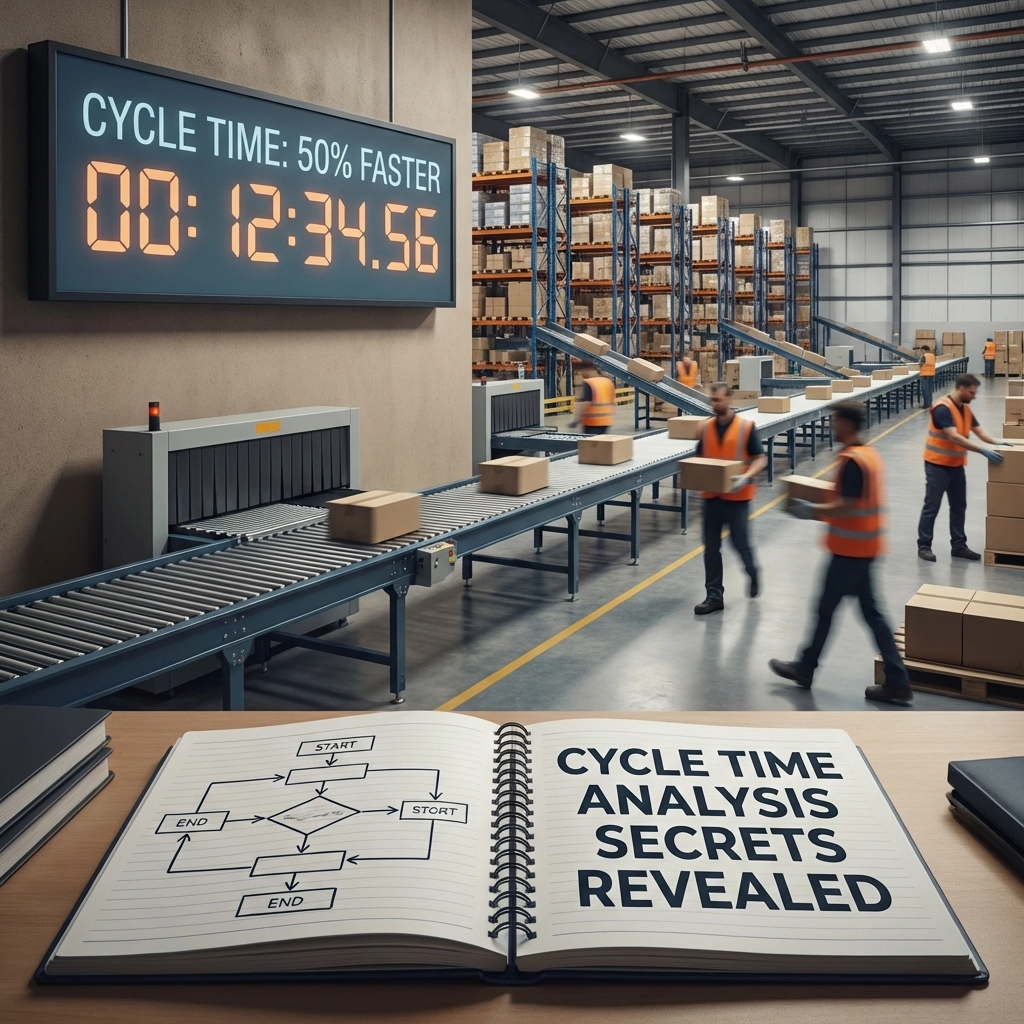
You've probably heard the buzz about cycle time analysis. Maybe you've even nodded along in meetings when someone mentions "optimizing cycle times" without fully grasping what that really means for your bottom line. Here's the thing: most supply chain professionals keep the real secrets close to the vest. Why? Because understanding cycle time analysis gives you a serious competitive advantage.
We're about to change that. At Performance Logistics Consulting LLC, we believe in transparency. And today, we're pulling back the curtain on exactly how cycle time analysis can deliver 50% faster fulfillment speeds: and why so many operations are leaving money on the table.
What Exactly Is Cycle Time (And Why Should You Care)?
Cycle time measures the actual time it takes to complete one full unit or process from start to finish. We're talking about the active, value-adding work: not the time your orders sit around waiting for someone to pick them up.
Think about it this way. When a customer places an order, how long does it actually take your team to pick, pack, and ship that item? Not how long until it ships, but how long someone is actively working on it. That's your cycle time.
And here's where it gets interesting…
Most warehouses focus obsessively on lead time: the total duration from order placement to delivery. But lead time includes all that waiting around. Cycle time? That's where the real operational efficiency lives. It's the metric that tells you how well your processes actually perform when work is happening.

The Secret No One Talks About: Cycle Time vs. Lead Time
Here's what supply chain experts don't always explain clearly. You can have a stellar cycle time and still disappoint customers if your lead time is bloated with delays before processing even starts.
Picture this scenario. Your picking process takes 3 minutes per order (great cycle time). But orders sit in a queue for 4 hours before anyone touches them. Your lead time just ballooned, and customers are wondering why their "in-stock" item takes two days to ship.
The secret? Attack both metrics, but start with cycle time. Why? Because cycle time improvements create capacity. When you reduce the time each order takes to process, you free up resources to handle the queue faster. It's a domino effect that transforms your entire operation.
Companies that understand this distinction consistently outperform their competitors. They're not just faster: they're far more efficient with the same resources.
The Formula That Changes Everything
Ready for some simple math that can revolutionize your warehouse?
Cycle Time = Total Production Time ÷ Total Units Produced
That's it. Calculate this across your key processes: receiving, putaway, picking, packing, shipping: and you'll start seeing patterns emerge. Where are the bottlenecks? Which stations consistently underperform? Where does work pile up?
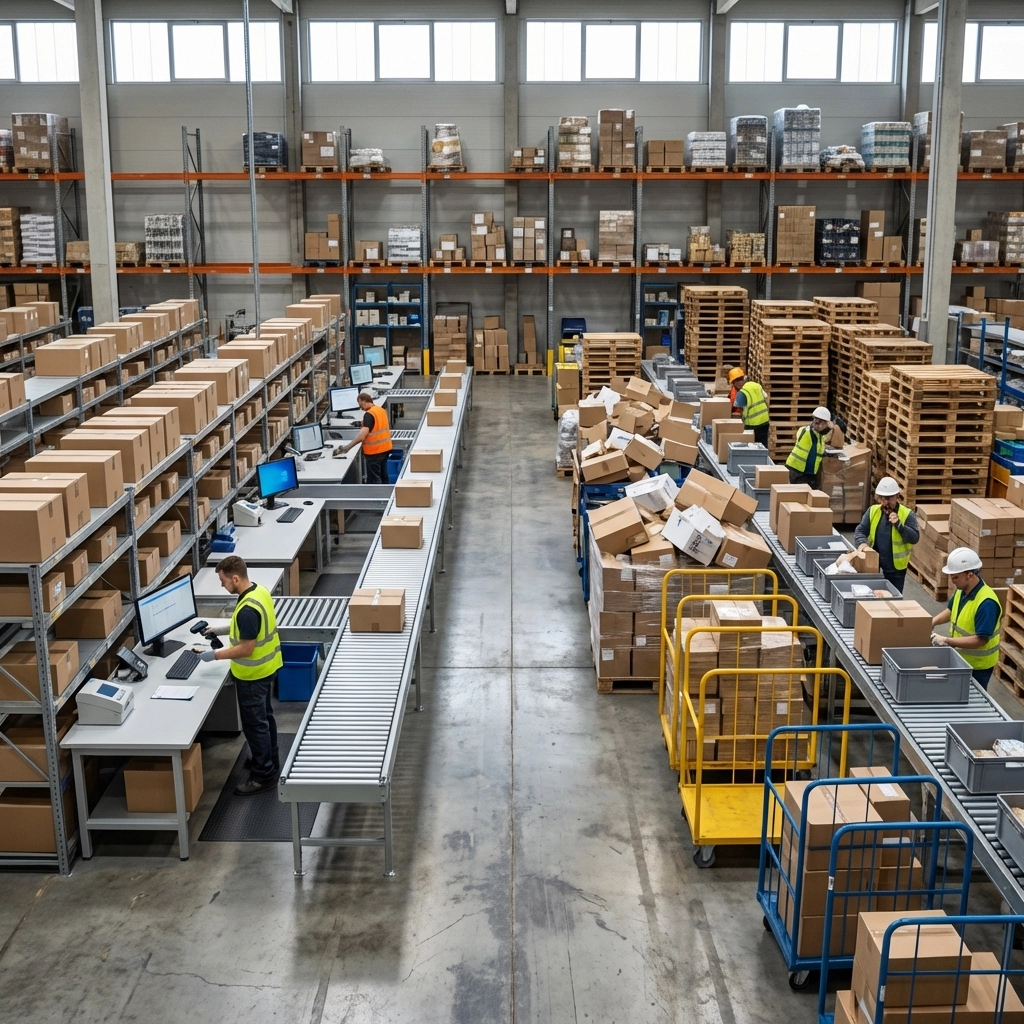
Most operations measure this sporadically, if at all. The real secret is consistent, granular measurement. Track cycle times by:
- Individual process steps
- Time of day
- Employee or team
- Product category
- Order type (single item vs. multi-item)
When you slice the data this way, the improvement opportunities practically jump off the page. We've seen clients discover that 60% of their delays came from just one process step. Fix that single bottleneck? Instant 40% improvement in overall throughput.
5 Cycle Time Killers Hiding in Your Warehouse
Let's get specific. These are the culprits we see destroying cycle times in warehouses across the country:
1. Poor Slotting and Layout
When your fastest-moving products are stored in the back corner of the warehouse, pickers waste precious minutes on every order. Proper slotting program analysis can reduce travel time by 30-50% alone.
2. Manual Data Entry and Paper Processes
Every time an associate stops to write something down or key data into a system, cycle time suffers. Automation isn't just nice to have: it's essential for competitive fulfillment speeds.
3. Batching Gone Wrong
Batch picking can improve efficiency, but poorly designed batches create chaos. We've seen operations where associates spend more time sorting batched orders than they saved picking them.
4. Equipment Bottlenecks
Not enough scanners. Printers that jam. Conveyor systems that can't keep pace. Equipment constraints create invisible cycle time waste that compounds throughout the day.
5. Lack of Real-Time Visibility
If supervisors can't see cycle time performance as it happens, they can't intervene when problems arise. By the time you analyze yesterday's data, thousands of dollars in productivity have already walked out the door.

How to Actually Achieve 50% Faster Fulfillment
Here's where we get tactical. That 50% improvement isn't marketing fluff: it's achievable when you systematically address cycle time across your operation. Here's the playbook:
Step 1: Baseline Everything
You can't improve what you don't measure. Establish current cycle times for every major process. Be honest about where you stand.
Step 2: Identify Non-Value-Added Activities
Walk your processes. Literally. Follow an order from receipt to shipment. How much time involves actual work versus waiting, searching, walking, or fixing errors?
Step 3: Align with Takt Time
Takt time represents the production pace required to meet customer demand. If your cycle time exceeds takt time, you'll never catch up. If it's dramatically lower, you might be over-resourced. The goal is alignment.
Step 4: Implement Lean Principles
Standardized work. Visual management. Continuous flow. These aren't buzzwords: they're proven methodologies that eliminate waste and reduce cycle time consistently.
Step 5: Leverage Technology Strategically
The right WMS with proper labor management reporting provides the visibility you need to sustain improvements. MRP and ERP integrations reduce idle time and keep work flowing.
Step 6: Train and Empower Your Team
Your frontline associates know where time gets wasted. Ask them. Involve them in improvement initiatives. The best cycle time gains come from people who do the work every day.
The ROI You're Missing
Let's talk numbers. A distribution center processing 10,000 orders daily with an average cycle time of 6 minutes per order spends 60,000 labor minutes daily on order processing alone.
Cut that cycle time to 4 minutes? You just freed up 20,000 labor minutes. That's over 333 labor hours per day. At $20 per hour fully loaded, that's $6,660 in daily savings: nearly $1.7 million annually.
And that's just the labor savings. Faster cycle times mean:
- Higher customer satisfaction
- Better inventory turnover
- Reduced carrying costs
- Increased capacity without facility expansion
- Improved employee morale (nobody likes being behind all day)
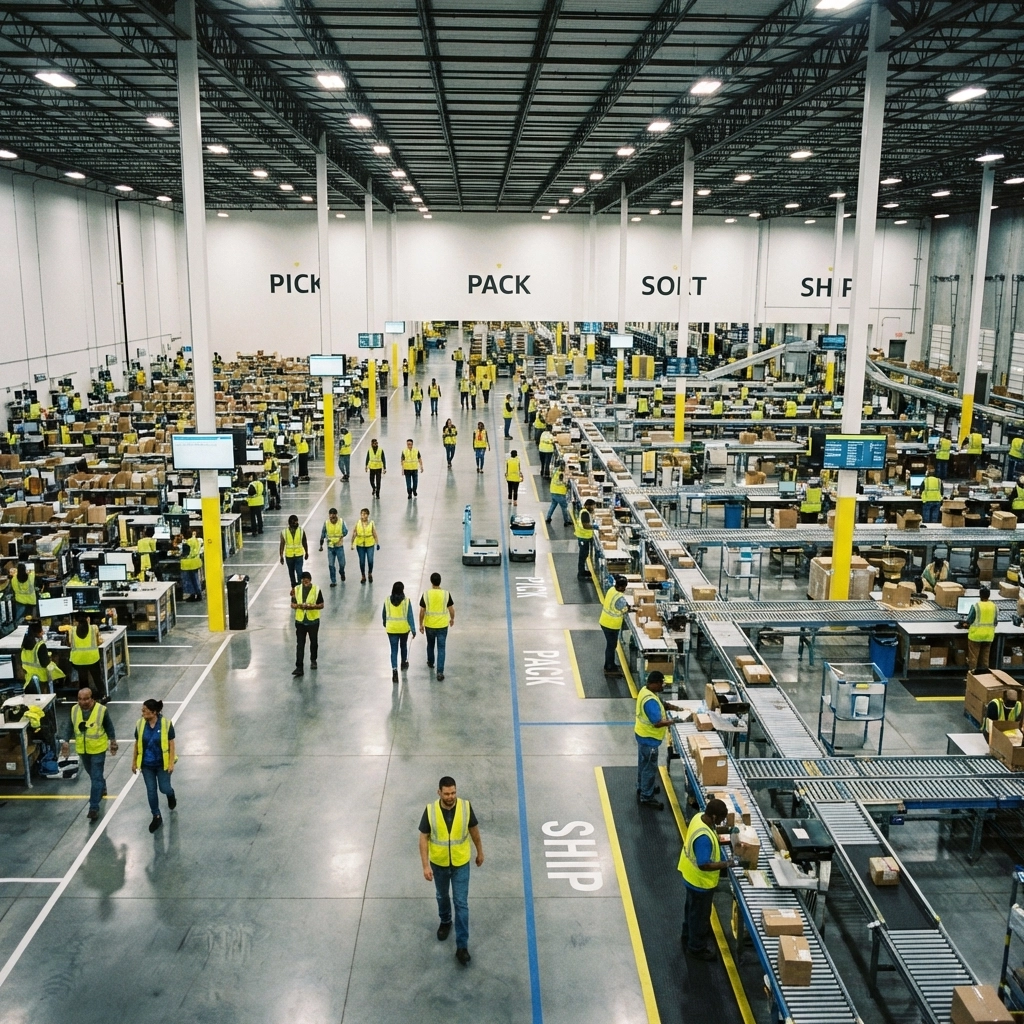
Why Most Companies Never Get There
So if cycle time analysis is so powerful, why aren't more companies seeing these results? Honestly, it comes down to three things:
Lack of expertise – Understanding cycle time is one thing. Knowing how to improve it without disrupting operations requires experience most teams don't have in-house.
Analysis paralysis – Data overwhelms teams who don't know which metrics matter most.
Siloed thinking – Optimizing one process while ignoring how it affects downstream operations just moves the bottleneck somewhere else.
This is exactly why working with experienced supply chain consultants accelerates results. We've seen what works across hundreds of operations. We know where to look and what to prioritize.
Ready to Unlock Your 50%?
Cycle time analysis isn't complicated, but it does require discipline, the right tools, and proven methodologies. The secrets we've shared today are just the starting point.
Want to know exactly where your operation stands and how much improvement potential exists? We're here to help. At Performance Logistics Consulting LLC, we specialize in warehouse optimization that delivers measurable results.
Give us a call or reach out through our contact page. We'd love to discuss your specific challenges and show you what 50% faster fulfillment could look like for your operation.
The competition isn't waiting. Why should you?