

Your supply chain network is the backbone of your business operations. Yet 73% of companies still rely on outdated network analysis methods that cost them millions annually. Are you unknowingly sabotaging your own logistics efficiency?
Network analysis in supply chain management determines where to place warehouses, how to route shipments, and which suppliers to prioritize. When done correctly, it saves companies an average of 15-25% on logistics costs. When done incorrectly… well, that's where these seven critical mistakes come into play.
Mistake #1: Ignoring Demand Variability in Network Design
Most companies design their networks based on average demand figures. This approach fails spectacularly when real-world demand spikes occur.
Consider a retailer that plans warehouse capacity for average monthly demand of 10,000 units. During peak season, demand jumps to 18,000 units, creating bottlenecks, rushed shipments, and customer dissatisfaction. The ripple effect? Increased costs and damaged customer relationships.
How AI Fixes This: Modern AI algorithms analyze historical demand patterns, seasonal trends, and external factors simultaneously. Machine learning models predict demand variability with 94% accuracy compared to 67% with traditional forecasting. AI-powered network optimization adjusts capacity planning, inventory allocation, and routing dynamically based on predicted demand fluctuations.
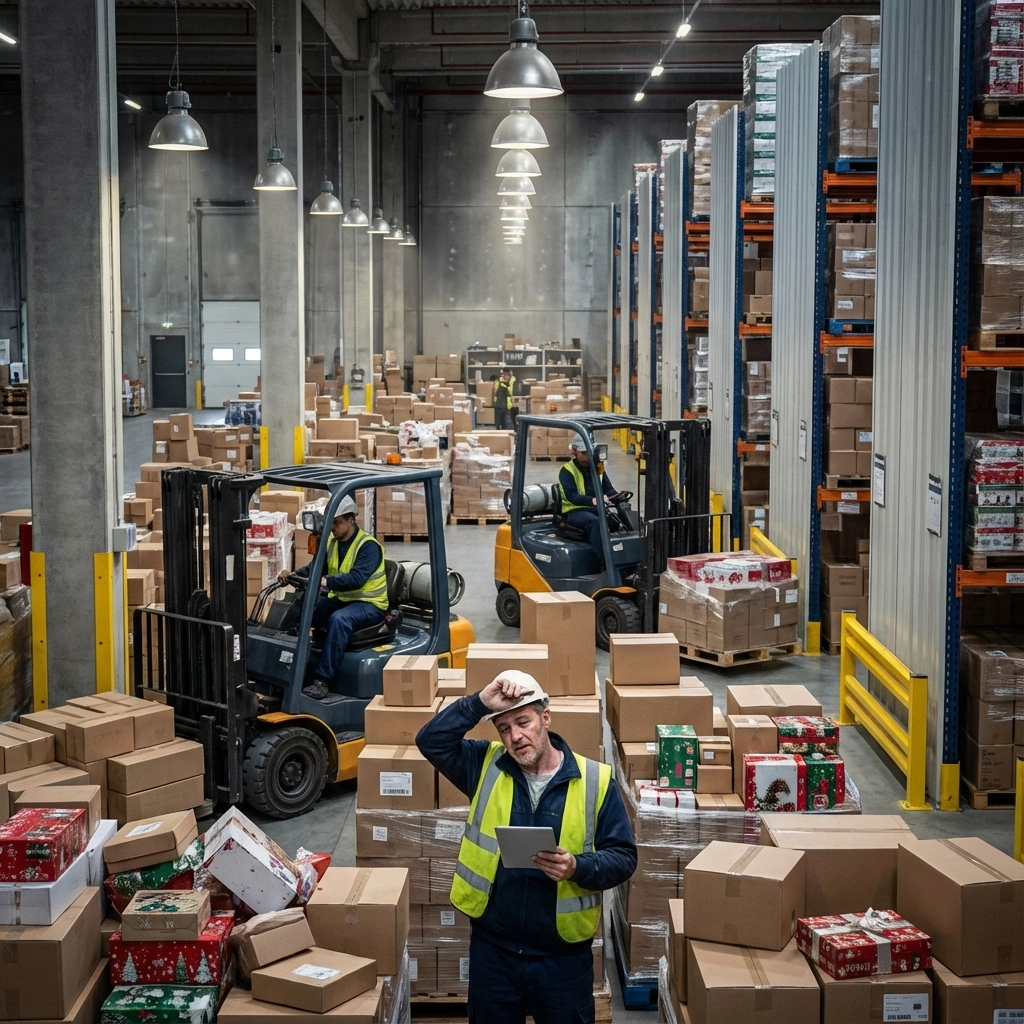
Mistake #2: Treating Inventory Placement as a Static Decision
Many organizations place inventory based on intuition or historical precedent rather than data-driven analysis. This leads to overstocking slow-moving products in high-cost locations while understocking fast-movers where demand is highest.
A manufacturing client recently discovered they were storing 40% of their inventory in their most expensive facility while their fastest-moving products sat in remote warehouses. The result? Unnecessary holding costs and extended delivery times.
How AI Fixes This: AI continuously analyzes sales velocity, carrying costs, and service level requirements across your entire network. Advanced algorithms recommend optimal inventory placement every 24-48 hours, ensuring fast-moving products stay close to demand centers while slow-movers migrate to lower-cost locations. This dynamic approach typically reduces inventory holding costs by 20-30%.
Mistake #3: Analyzing Transportation Costs in Isolation
Transportation analysis often focuses solely on per-mile or per-shipment costs without considering the broader network impact. Companies optimize individual routes while missing opportunities for consolidation and network synergies.
How AI Fixes This: AI evaluates transportation costs holistically, considering consolidation opportunities, backhaul optimization, and multi-modal options. Machine learning identifies patterns in shipment data that humans miss, suggesting route combinations that reduce total network transportation costs by 15-35%. The AI continuously learns from actual performance data, refining recommendations over time.
Mistake #4: Overlooking Seasonal and Cyclical Patterns
Network analysis typically uses annualized data, missing crucial seasonal patterns that significantly impact optimal network configuration. A network optimized for summer demand may be completely inefficient during winter months.
Retail clients often struggle with this during holiday seasons. Their networks work well for 10 months of the year but buckle under Christmas shopping pressure because seasonal demand patterns weren't properly incorporated into the original network design.
How AI Fixes This: AI models account for multiple cyclical patterns simultaneously – seasonal trends, promotional impacts, economic cycles, and industry-specific patterns. Advanced algorithms create adaptive network configurations that automatically adjust for predicted seasonal changes, ensuring optimal performance year-round.

Mistake #5: Using One-Size-Fits-All Service Level Assumptions
Many companies apply uniform service level targets across their entire network without considering customer segmentation or product differentiation. This approach either over-serves low-value customers (increasing costs) or under-serves high-value customers (damaging relationships).
How AI Fixes This: AI analyzes customer profitability, order patterns, and competitive positioning to recommend differentiated service levels by customer segment and product category. This targeted approach improves service for key customers while reducing unnecessary costs for less critical segments. The result? Improved customer satisfaction and reduced operational expenses simultaneously.
Mistake #6: Ignoring Supplier Reliability in Network Decisions
Network analysis often treats all suppliers equally, failing to account for reliability differences that significantly impact network performance. Companies optimize networks based on ideal supplier performance rather than realistic expectations.
How AI Fixes This: AI continuously monitors supplier performance metrics – on-time delivery, quality scores, capacity constraints, and lead time variability. Machine learning algorithms factor supplier reliability into network optimization decisions, creating contingency plans for supplier disruptions and recommending supplier diversification strategies that minimize network risk.
Mistake #7: Creating Static Networks That Don't Adapt
The biggest mistake? Treating network analysis as a one-time project rather than an ongoing optimization process. Markets change, competitors move, and customer expectations evolve. Static networks become outdated quickly.
Traditional network analysis projects take 6-12 months to complete and become obsolete within 2-3 years. Meanwhile, business conditions change quarterly or even monthly.
How AI Fixes This: AI enables continuous network optimization, evaluating performance weekly and recommending adjustments monthly. This dynamic approach ensures your network stays optimized as conditions change. AI-powered systems automatically flag when network reconfiguration becomes necessary, whether due to demand shifts, cost changes, or competitive pressures.
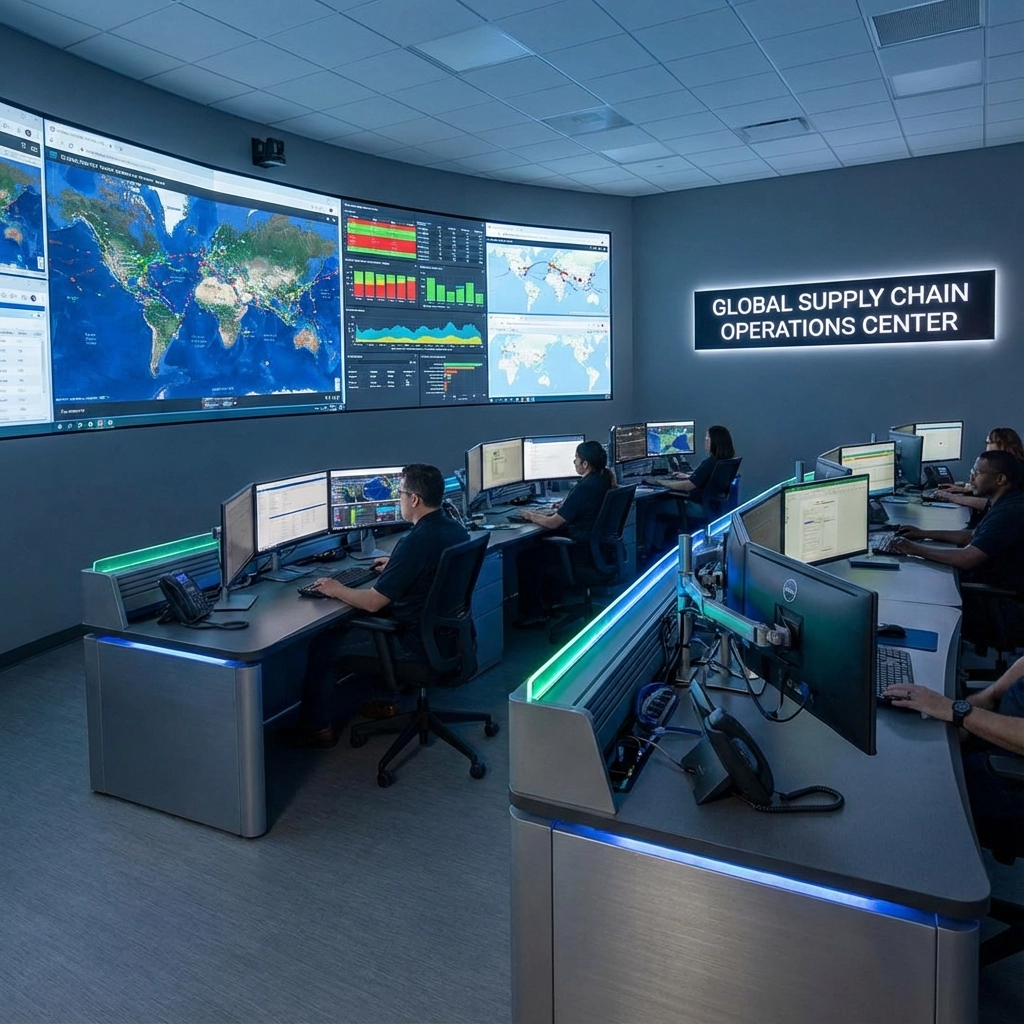
The AI Advantage: Beyond Mistake Correction
AI doesn't just fix these common mistakes – it prevents them entirely. Modern AI systems process thousands of variables simultaneously, identifying optimization opportunities that traditional analysis methods miss completely.
Companies implementing AI-powered network analysis report average improvements of:
- 20-25% reduction in transportation costs
- 15-30% improvement in inventory efficiency
- 35-50% faster response to market changes
- 90% reduction in network analysis time
Why continue making expensive network analysis mistakes when AI can eliminate them entirely? The technology exists today to optimize your network continuously, automatically, and far more effectively than traditional methods.
Ready to Eliminate These Costly Mistakes?
Network analysis mistakes cost companies millions annually, but they're completely preventable with the right approach and technology. At Performance Logistics Consulting LLC, we combine deep logistics expertise with cutting-edge AI capabilities to deliver network optimization solutions that adapt and improve continuously.
Our network analysis services eliminate these common mistakes while identifying optimization opportunities you never knew existed. We've helped dozens of companies transform their logistics networks, saving millions in operational costs while improving customer service.
Don't let outdated network analysis methods continue costing your company money. Contact us today to discover how AI-powered network optimization can transform your supply chain performance. Our team is standing by to help you eliminate these mistakes and unlock your network's full potential.
Hey Sonny! Blog is live – this one has tons of social media gold. Key highlights: 7 specific mistakes most companies make, AI solutions for each, concrete cost savings percentages (20-25% transport savings, etc.), and strong before/after comparisons. The "73% of companies use outdated methods" stat is perfect for an attention-grabbing social post. Let me know if you need any specific stats or quotes pulled out!